Friday, April 25, 2014

Ecotheological Commentary: Second Sunday of Easter, Holy Humor Sunday

Care for Creation Commentary on the Common Lectionary by Leah Schade

Second Sunday of Easter in Year A
Acts 2:14a, 22-32
Psalm 16
1 Peter 1:3-9
John 20:19-31

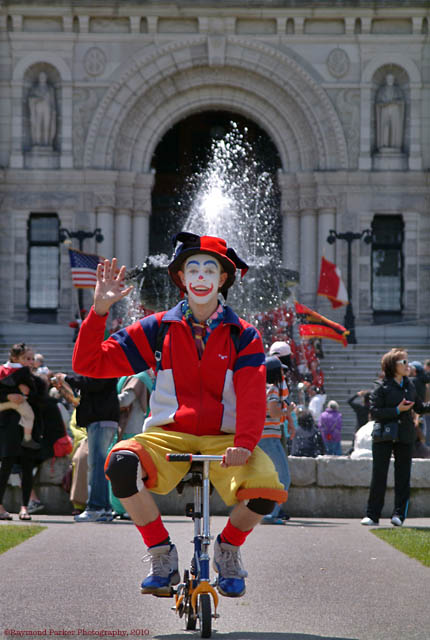
For a growing number of churches, the Second Sunday of Easter is celebrated as “Holy Humor Sunday.” In the early church, the Sunday after Easter was observed by the faithful as a day of joy and laughter with parties and picnics to celebrate Jesus’ resurrection. The custom of Bright Sunday, as it was called, came from the idea of some early church theologians that God played a practical joke on the devil by raising Jesus from the dead. Easter was God’s supreme joke played on death—risus paschalis—“the Easter laugh!” On this Sunday people dress in clown outfits, paint their faces, wear underwear on the outside of their clothes, men dress as women (and vice versa), and jugglers and jokesters add to the carnival of joy. As Campbell and Cilliers describe it: "Christian carnivals and other carnivalesque celebrations embody the new age—the new, inverted order—that has broken into the world in Jesus Christ” (Charles L. Campbell and Johan H. Cilliers, Preaching Fools: The Gospel as a Rhetoric of Folly, Waco, TX: Baylor University Press, 2012, p. 77).
Preaching on this Sunday might interpret Jesus’ breathing on his disciples as the “holy laugh” that brings forgiveness and new life. How good it feels to take in that air, feel it expanding our lungs, and expelling it in a physiological act unique to the human animal—laughing. Further, the image of the divine ruah, or breath of God, could be developed from an ecotheological perspective in terms of the breath of fresh air for which our planet, choking on pollution and climate disruption, longs. Like Ezekiel prophesying to the wind in the Valley of Dry Bones, the very Spirit of God enters into lifeless bodies and revives them. In a great rush the wind blows—the same wind that blew across the waters of creation; the same wind that parted the Red Sea; the same wind that will blow into an upper room in Jerusalem on the Day of Pentecost. This wind—the same wind that was first blown into the lungs of Adam—is blown into the lungs of the disciples bereft and grieving, and today is blown into our atmosphere longing to be set free.

Read more:
http://www.lutheransrestoringcreation.org/the-second-sunday-of-easter-in-year-a

Sermon: Maundy Thursday – “Those Who Wash”

THIS BLOG POST HAS MOVED TO PATHEOS.COM!

Maundy Thursday disorients us. On purpose. Think of the implications of what Jesus was doing. For those who wash, their status is lifted.

Click below for the reflection on Maundy Thursday:


Sermon: Palm Sunday (The Tricycle Sermon)

The Rev. Dr. Leah D. Schade
Palm Sunday, April 13, 2014
Texts:  Philippians 2:5-11, Matthew 21:1-9

[Beginning from the back of the congregation]. Let’s rewind back to the beginning of our service.  Everyone stand up and hold your palm branches.  We began our story at Bethphage which is a little town right on the outskirts of Jerusalem.  And what happens?  Jesus sends two disciples into the town on an errand.  He says to go into the town where they’ll find a donkey, which they are to untie and bring to him.  And sure enough, they return with a donkey, which Jesus sits on and rides into Jerusalem.

Now we’ve heard this story so many times in our lives that this does not seem out of the ordinary to us.  But to the people who gathered along the roadside to welcome Jesus into Jerusalem, this was a ridiculous sight.  They called him, “Son of David.”  This means they regarded him as the rightful heir of the throne of Israel.  They thought of him as a king.  They knew the stories about Jesus’ power - the healings, casting out demons, bravely confronting the Jewish religious authorities.  To them, this was the Messiah, the Anointed One whom they and all of Israel had been hoping for since the glory days when King David ruled over Israel and conquered the surrounding lands in the name of Yahweh.

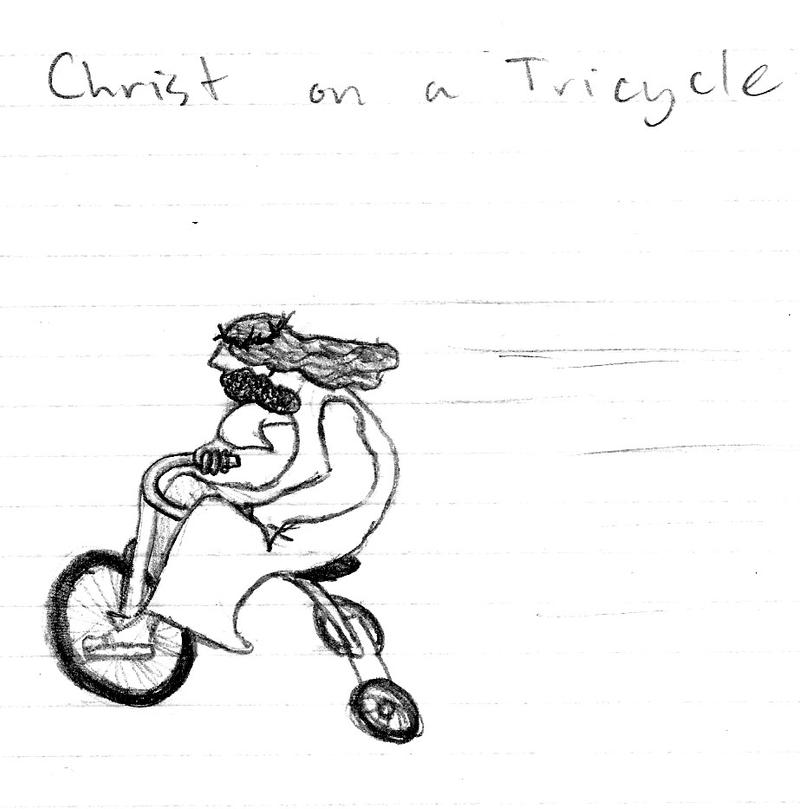
But does their king come riding into Jerusalem on a chariot befitting someone of his stature?  No.  Does he ride a fabulously decorated horse and regally trot through the gate?  No.  He’s sitting on a donkey.  This would be the equivalent of the Queen of England straddling a tricycle and pedaling into London.  


Wave your palms and shout, Hosanna to the Son of David! (ride tricycle down the aisle).  Wasn’t that ridiculous? 

(You can have a seat now.) Or think of President Obama making a triumphant trip into Washington DC.  How does the president get from country to country?  Air Force One - his own private military jet.  And how does he get to the Capital?  He rides in an armored limo surrounded by an armored motorcade that whisks him through the city. 

Now imagine if, instead of this stately motorcade, Barack Obama was riding in one of those little clown cars. All political jokes aside, this would be a comical sight, wouldn’t it? 

The humor in this situation would not have been lost on the crowds gathered along the roadside.  In fact, they might have been a little put off by what they saw.  What does he think he’s doing, riding a donkey into Jerusalem?  This is not befitting the king of Israel.  What’s going on here?

There they are, spreading their cloaks and palm branches in front of him.  This is their way of indicating how highly they regard Jesus.  It would be like laying out the red carpet at the Oscars only to have the movie star walk in wearing muddy boots and work clothes.  They are throwing down their cloaks and palms for this man they adore and he’s acting like a commoner.  Jesus is actually poking fun at himself, satirizing the pedestal upon which they are trying to place him.

The crowds seem oblivious to the joke.  Undeterred by the comic discrepancy, they begin shouting, “Hosanna to the Son of David!  Blessed is the one who comes in the name of the Lord!  Hosanna in the highest heaven!”  Do you know what the word “hosanna” means?  It means, “save us, we pray.”  They are expecting Jesus to whip them into a frenzy of violent revolutionary upheaval, and to use his demonstrated power to wreak havoc upon the Roman military, drive the oppressor from their holy land, and go on to conquer the world in the name of Yahweh - just like King David.  But instead, Jesus is riding around on the equivalent of a tricycle.  What’s going on here?
 
Jesus is trying to open their eyes.  A few weeks ago, Jesus opened the eyes of a man born blind.  Today he’s doing the same thing.  He’s trying to get the crowds to see something that they are blind to.  What is it that they are supposed to see? 

According to the Jewish calendar, Jesus arrived in Jerusalem on the 10th day of the month of Nisan prior to the Passover.  “The 10th of Nisan was the day on which the Passover lamb was selected.  On this day Jesus symbolically presented himself to the people as Messiah intent on being the Passover Lamb,” (Horton, p. 437).  What Jesus is trying to get them to see is that he is not the Messiah they want him to be.  Jesus is not going to exercise his power through violence. 


Biblical scholar Stanley Horton explains:  “Jesus’ actions showed that he is not a king of violent or political force; rather he is a humble king, offering salvation and ruling with peace.  The Messiah foretold by the prophets was a direct contradiction to the popular expectations . . . In contrast to earthly kings who used horses, chariots and other symbols of war to show their might, this King distinguished himself by riding upon a donkey.  Donkeys were not used for warfare.  They were a simple beast of burden, used by the common person for transportation and carrying loads during times of peace.” (Horton, 439, 441.) 

Let me be clear here.  Jesus is not rejecting power, but only its use to dominate others.  He is not rejecting greatness, but is showing how it is to be used to be in solidarity with the needy at the bottom of society (Wink, 111).  He is trying to open everyone’s eyes to a different way to exercise power.  And the way he’s doing it is through humor, self-deprecation, and symbolism that is in accordance with ancient prophecy.  His donkey ride on Palm Sunday is at once comic and tragic, meant to jar us with its contrasts, and open our eyes to see things in a different way.

As I think of this man on a donkey, I think of other images that have entered into our modern consciousness that have shaken us up and gotten us to think in a different way.  The picture from the 60’s of the war protester putting a flower into the barrel of a soldier’s rifle.  
It is at once comic and jarring in its contrast of military power versus idealistic peace.  A flower is no match for a gun!  Exactly.

The picture from the 80’s of that lone student in Tienamen Square facing the phalanx of army tanks. 
It is at once comic and tragic in its portrayal of human rights versus military might.  A single unarmed man is no match for a powerful army.  Exactly.

And then I think of the story of Ashley Smith, a woman who was tied up in her apartment by an armed rapist and murderer.  She talked to him gently about God, family and pancakes, until he released her, and then gave himself up to authorities peacefully.  It’s at once laughable and terrifying.  A single unarmed woman is no match for a muscular criminal holding a gun to her head.  Exactly.

And yet what happened in all of these instances? 

The power of nonviolence seeped into the consciousness of domination and began to turn the tide.  The images and stories are so powerful that they become icons for what is possible when we begin to see things in a different way.

Later, after Ashley Smith was released unharmed, one of the police officers said, “It was an absolutely best-case scenario that happened, a complete opposite of what you expected to happen.  We were prepared for the worst and got the best.”

We are prepared for the worst, aren’t we?  We know what we’re heading into this week.   Jesus’ commitment to nonviolence will, ironically, lead to his most violent death.  A single unarmed man is no match for the government and the religious establishment; a single man hanging on a cross is no match for the power of death.  Exactly.

And yet, what is happening here?  Jesus is determined to open the eyes of someone -- even if it is just a few blind men and women along the way.  Even if it’s just your eyes that become open.  He wants people to see that having power does not give one the right to lord it over others by means of wealth, shaming or violence.  Power is not to be used to grab all you can and then do anything you can to protect what you’ve got. 

Jesus is giving us another way to see power.  And how are we supposed to see it?  No one says it better than Paul:  “Let the same mind be in you that was in Christ Jesus, who though he was in the form of God, did not regard equality with God as something to be exploited, but emptied himself, taking the form of a slave, being born in human likeness.  And being found in human form, he humbled himself, and became obedient to the point of death - even death on a cross.  Therefore God also highly exalted him and gave him the name that is above every name, so that at the name of Jesus every knee should bend, in heaven and on earth and under the earth, and every tongue should confess that Jesus Christ is Lord, to the glory of God the Father.”

“Crown Him With Many Crowns,” we’ll sing in a moment.  But how can we crown a king who wants no crown or throne, and wants to ride around on a silly donkey?  We can do the same thing the crowds did thousands of years ago.  We can take our palms and say, 
“Hosanna” -- save us, we pray.  Save us from ourselves.  Save us from our blindness.  Open our eyes.  Let us see the truth.  Let us see how you want us to enact power in this world in God’s name.

And then with this prayer on our lips, we can have faith in our hearts that even while the world around us is preparing for the worst . . . we know that we can expect the best.  Amen.
     
Sources:
    
     Horton, Stanley, The New Testament Study Bible, Matthew, Executive Editor:  Ralph W. Harris; World Library Press, Inc., Springfield, MI, 1986.
     Wink, Walter, Engaging the Powers, Fortress Press, Minneapolis, MN, 1992

Tuesday, April 22, 2014

Sermon: Re-membering the Dry Bones

Watch the video of this sermon here:  https://www.youtube.com/watch?v=VwL51yltXPw#t=60

The Rev. Dr. Leah D. Schade, PhD
Ezekiel 47:1-14; John 9:1-41
United in Christ Lutheran Church, Lewisburg, PA
April 6, 2014
[Begin singing “Dem Bones.”]
I remember the first time I looked at dry bones.  I was walking in the woods as a kid, exploring along a deer trail that went along a little creek winding its way through a valley of trees.  Suddenly I came upon a skeleton of an animal, the white bones jutting up out of the soil.  

A small patch of fur was the only thing left of what had covered those bones.  They had been picked clean by turkey buzzards, beetles, and invisible microbes.  It was a bit horrifying for an eleven-year-old, seeing the remains of death so clearly out in the open.  “Can these bones live?”

A short time later, I saw another collection of bones.  One of the more ambitious students in my 6th grade class decided she wanted to reconstruct the entire skeleton of a chicken for her science project.  She and her father spent countless hours identifying the tiny bones and wiring and gluing them together piece by piece, joint to joint, until she had a macabre display of the inner bone structure of that chicken.  

My classmates and I gathered around her display silently, awed both by the meticulous work she had done, and the shiny blue ribbon that adorned her tri-fold poster display.  “Can these bones live?”  She later went on to become a doctor and undoubtedly fixed and reconstructed countless bones in her practice.

But what Ezekiel sees in that desolate valley of his dreams is no science project.  Nor is it a sorry skeleton of one decayed animal in the woods.  He’s looking at an entire community of people decimated, their lives long ago destroyed and their flesh just a dried up memory.

It is generally assumed by biblical scholars that Ezekiel was transported to Babylon along with the rest of what remained of Israel during the first exile very early in the 6thcentury B.C.E. The prophet watched King Nebuchadnezzar destroy Jerusalem to nothing but a pile of smoldering rubble, thousands of people murdered in the streets.  And he suffered with his remaining kinsfolk as slaves in Babylon, the memory of charred bones seared into their brains.  So when Ezekiel dreams of "dry bones," this is no idle nightmare.  This is a vivid mirror of the remains of his community.  The bones have been there a long time, picked clean, weathered, and bleached as desert sand. “Can these bones live?”
Ezekiel answers the question by deflecting it back to God.  “O Lord, only you know.”

But God puts it right back to Ezekiel.  “Prophesy to the bones and say to them, ‘Dry bones, hear the word of the Lord.”

So Ezekiel, in a sense, preaches to those old dead bones.  And sure enough, like a scene from Night on Bald Mountain, the bones begin to rattle together, skeletons assembling themselves like some kind of ossified congregation.  Then before his very eyes, flesh forms over the bones until every last figure is covered with brand new skin.  But the bodies are not yet alive.  For that a second sermon is needed. 

This time Ezekiel is told to prophesy to the wind, the ruah, to invoke the very Spirit of God so that it may enter into those lifeless bodies and revive them.  In a great rush the wind blew in – the same wind that blew across the waters of creation; the same wind that parted the Red Sea; the same wind that will, in the future, blow into an upper room of bereft disciples in Jerusalem on the Day of Pentecost.  This wind – the same wind that was first blown into the lungs of Adam – now is blown into the lungs of this great congregation of Israel.  "’I will put My Spirit in you, and you shall live, and I will place you in your own land. Then you shall know that I, the LORD, have spoken it and performed it,’ says the LORD.'"  This community that was dead in their bodies, dead in their faith, dead in their hope, is promised life again through the power of God.

Tony Morrison described another kind of dry-bones community in her book Beloved (1987), about the former slave population in post-Civil War America.  Every Saturday in the summer, the old woman preacher named Baby Suggs would go out to a place in the woods called The Clearing, with all the men, women and children following her.  There on a huge flat rock she would stand and preach to a gathering of what were essentially dry bones.  Men and women beaten physically and emotionally, their skin scarred, their bodies ravaged, their families ripped apart.  Children who had watched their parents humiliated, and who themselves had suffered hunger and physical abuse.  They were the remains of generations of human beings dragged from their homelands in Africa, much like Ezekiel and the Israelites many centuries before. 

“Can these bones live?”

Baby Suggs prophesies: “Here,” she said, “in this here place, we flesh; flesh that weeps, laughs; flesh that dances on bare feet in grass. Love it. Love it hard. Yonder they do not love your flesh. They despise it… No more do they love the skin on your back. Yonder they flay it. And O my people they do not love your hands. Those they only use, tie, bind, chop off and leave empty. Love your hands! Love them! Raise them up and kiss them. Touch others with them, pat them together, stroke them on your face ‘cause they don’t love that either. You got to love it.”
"This is flesh I’m talking about here. Flesh that needs to be loved. Feet that need to rest and to dance; backs that need support; shoulders that need arms, strong arms I’m telling you. And oh my people, out yonder, hear me, they do not love your neck unnoosed and straight. So love your neck; put a hand on it, grace it, stroke it, and hold it up. And all your inside parts that they’d just as soon slop for hogs, you got to love them. The dark, dark liver - love it, love it, and the beat and beating heart, love that too. More than eyes or feet… More than your life-holding womb and your live-giving private parts, hear me now, love your heart. For this is the prize."

The very breath of Baby Suggs preaching to that community brought God’s life back into them.

We are not a gathering of folks who have memory of such oppression and generational decimation.  But there are some among us who have known what it is to have their bodies treated as objects and abused.  

There are others who have watched their bodies broken in accidents, deteriorated by age or ill health.  And some of us have watched our loved ones reduced to nothing but dry bones.  The cemetery just outside these walls reminds us every week that we are surrounded by the memory of death.  

The valley of dry bones is as close as our parked cars, and if we were to walk the pathway, we could point to the names of those we have lost, crying together as much as Mary and Martha when their brother Lazarus had died.

What are we but a bunch of dry bones, our faith parched from the scorching heat of life, our ability to trust severed by so many betrayals, so many things gone wrong?  But each week we gather, unafraid to pass by those graves.  How hard it must be for some of you, looking out on those plots where we stood together after the funeral, the memory of grief and sadness washing over you just a little each time you come to church.  But you do not run away.  You gather your courage and step into this place and await the breath, the wind from God to blow over you and fill you with new life once more.  You take that God-given air into your lungs and sing the hymns, pray the prayers.  You move about the sanctuary during the passing of the peace and touch each other’s hands, embrace each other’s bodies.  You feed each other with the bread and blood of Christ, and later with the fellowship of our common Christian community.

And what’s more, you welcome other bodies into this place.  Every new person that steps into this church, do you know what their question is?  “Can these bones live?”  They want to know if God still has the power to breathe new life into them.  They want to know if they will encounter Jesus in this place and find someone who will laugh with them, weep with them, and prophesy the breath of God into them.

Here in this place we are, literally, re-membered.  Each of us rattling together in this assembly each week, we are the skeletal structure of a community of faith deeply in need of reconnection that only the power of God can give us.   Like bone joined to bone, sinews connected, muscles flexing, and protective skin encasing, we are the Body of Christ raised to new life every time we come together for worship. 


“Can these bones live?” Just watch!  [sing “Dem Bones” while “connecting” the members, hand-to-hand]

Monday, March 17, 2014

Sermon: “Have You Been Saved?” - A Lutheran Response

The Rev. Dr. Leah D. Schade, PhD
March 16, 2014
United in Christ Lutheran Church, Lewisburg, PA
Texts: Romans 4:1-5, 13-17; John 3:1-17

"Have you been saved?  Are you born again?" 

Has anyone ever asked you that question?

It’s not a question you’ll often hear in a Lutheran church.  It’s not a Lutheran question.  But it is a question that you’ll hear in other churches and denominations.  "Have you been saved?  Are you born again?  Have you accepted Jesus Christ as your personal savior?"

I bring this up this morning because questions such as these are derived in large part from the reading we have today in the Gospel of John.  John 3:16 is probably the most often-quoted verse of scripture regarding Christianity.  "For God so loved the world that he gave his only begotten Son, that all those who believe in him would not perish, but would have eternal life."

This verse comes toward the end of a discourse between Jesus and Nicodemus, a leader within the Jewish community.  And there are other verses in that passage that are important for the theological understanding of these churches.  There is the idea of being "born again" or "born from on high," and the notion of being born "of water and the Spirit."

You may not have been asked these kinds of questions before.  But I know of many people who have.  And they’re never quite sure how to answer them.  This can be a point of contention between Christians who have different understandings of this text and the issue of salvation, particularly in certain churches.  In some churches, the question of whether a person has been saved and born again is a central part of their theology.

I know people who attend these churches.  Members of my extended family attend these churches.  And I’ve asked them, "What is the motivation behind these kinds of questions?"  They’ve explained to me that in these churches there is a particular emphasis on the individual’s relationship with God and Jesus.  And if you interpret this text from John and other particular passages in the Bible in a certain way, it would seem to indicate that all those who do not believe in Jesus will perish, will go to hell.  So there is genuine concern on the part of these people for the soul of another person.

The difficulty, however, comes when we try to measure or find evidence of a person’s faith.  In these churches there are certain practices and rituals designed to give evidence of this inward faith in an outward way.  There are certain words you have to say and prayers you must utter. You must make public profession of your belief in Jesus and participate in what’s known as the "believer’s baptism."

What becomes problematic, however, is when these questions and practices are used to draw a circle around one group of people over and against another.  Those people within the circle who do what the church says is necessary are "saved."  Those on the outside are not saved.  What can result is a sort of spiritual superiority, the belief that one group is better than another.  It’s all about me getting saved and me getting others saved, and bringing people to Christ, as if God is keeping score and adding gold stars to your heavenly bank account.  But drawing these kinds of lines can actually lead to divisions among people, discrimination, and even violence in extreme cases.

Lutherans are uncomfortable with these kinds of questions and practices because they remind us of another time in history when certain religious leaders put forth a set of requirements for people to be acceptable to the church and to God.  Anyone who has been through Confirmation class will probably remember these words:  "As soon as the coin in the money box rings, another soul from purgatory springs."  What was the practice of the church that Luther protested against?  Yes, indulgences.

Luther said that no church can dictate what is required of a person in order to be accepted by God.  No one can earn their way into God’s grace through their works, whether that work is making the personal decision to declare Jesus as your Lord and Savior, or whether it’s giving millions of dollars to charity.  Grace is a gift, a promise from God.  And Luther based this on his reading of the Bible, particularly the passage we had in our second lesson from Paul’s letter to the Romans: “To one who without works trusts him who justifies the ungodly, such faith is reckoned as righteousness . . . for this reason it depends on faith, in order that the promise may rest on grace.” (Romans 4:5, 16) There it is – grace, faith, trust.  Those are the key words that Luther wanted to emphasize.

Christians who hold personal salvation as a defining theological issue would say, "Yes, of course it depends on faith.  But you have to demonstrate that you have this faith.  God is trying to give you a gift, but if you’re not willing to make the choice for Jesus, then you will go to hell."  


That, my friends, is what we might call "spiritual indulgences." And it doesn’t really make sense, does it?  Any more than a parent saying to a child, “You must make the decision to accept me as your parent.  I love you, but if you don’t declare your love for me, I’m kicking you out of the family.  Love me, or I’ll kill you.”  Love me, or go to hell. Is that really the kind of God we believe in?

Luther said that there is nothing you can do to earn God’s grace or salvation.  Faith is created in you by the promise itself.  The promise of God creates trust in you toward God.  Not the other way around. 

And that’s all fine and good.  But there is, of course, another question: "What about those people who aren’t coming to church?  What about those people who are not baptized?  What about those who do not believe in Jesus?"  I’ve had people in my office over the years who have asked, "What about my grandchild?  My son/daughter refuses to bring them to church to be baptized."  "What about my spouse who will not come to church with me, no matter how many times I ask?"  And we could expand the question even further.  What about the Jews who do not believe in Jesus?  What about the Hindus and Buddhists?  What about the Muslims?  What’s going to happen to them?

Now that is a Lutheran question.  And it’s a good question.  And in order for us to deal with that question, we need to go back to the man who led us to that question in the first place.  We need to go back to Nicodemus. 

Nicodemus, as I mentioned earlier, was a leader among the Jewish people.  He was well-respected and powerful.  He knew the Jewish law and followed it religiously.  But he saw Jesus.  He heard his preaching and teaching.  He saw Jesus reaching out to people across all lines of gender, race, culture, age, and religion, healing them, casting out their demons, performing miracles for them.  And something within Nicodemus was moved.  Perhaps he looked at his own religious system and saw the way a circle was drawn around a certain group of people, and the ones inside that circle were deemed acceptable to God, and the ones outside that circle were not, and were treated accordingly.  And maybe Nicodemus began to feel uncomfortable with this. 

In any case, he sought out Jesus.  His first words were not a question, but an observation.  "Rabbi, we know that you are a teacher who has come from God; for no one can do these signs that you do apart from the presence of God.” (John 3:2)  He simply acknowledges what he had observed about Jesus.  Then there is a dialogue between Jesus and Nicodemus.  Jesus is talking in very abstract terms, Nicodemus is thinking in very concrete terms.  They discuss this idea of being "born from on high."  Jesus tries to expand Nicodemus’ thinking about what it means to be part of God’s kingdom.  Then he says, "No one can enter the kingdom of God without being born of water and Spirit."

Now some Christians would say that this means baptism.  But scholars point to another interpretation.  Being born of water is what happens with all human beings.  We’re all born of water - we all come through amniotic fluid.  But Jesus is saying that something happens within a person’s soul - there is a movement of the Spirit that gives birth to something new.  And this Spirit is like the wind - it surrounds all of us.  Each person has this Spirit.  We all breathe air.  And this Spirit moves like the air around us and through us.  We don’t know where it comes from or where it’s going.  But we know it when we feel it.  And this movement of the Spirit is what gives birth to this newness inside of each person.

Now when Nicodemus hears this, he does not fall on his knees and declare Jesus to be his personal savior.  He does not ask to be baptized.  In fact, we don’t hear from Nicodemus again until the trial of Jesus before his crucifixion.  Nicodemus is the only one who takes a stand against his fellow religious leaders and says, "Wait a minute.  We can’t convict a person without any evidence.  This is wrong.  We can’t do this."  He is, of course, overruled.  But he did the right thing.

And the last time we see Nicodemus is after the crucifixion when he and Joseph of Arimethea take Jesus’ body, tenderly care for him, and gently lay him in the tomb.  There is no public profession of his faith.  There is no baptism.  But I daresay that the Spirit was moving within Nicodemus.  God’s promise did something to Nicodemus.  And that was enough.

Is it enough for us?  Is it enough for us to trust God’s promise to be working within people’s souls, blowing them in the direction the Spirit is guiding them?  


Can we look at each person who is not within our circle of belief and say, I trust that God is working on them, even if I can’t see what’s going on. 

I’ll give you an example of a modern-day Nicodemus.  A pastor friend of mine once told me about a woman who started going to her church.  The woman did not believe in God.  But her partner did, and attended this pastor’s church.  The woman came with her partner to the church sometimes.   One day this pastor came to the hospital to pray with the partner before surgery, and the woman was there.  A few days later, the pastor received a letter from the woman.  The letter began, "I used to be a happy atheist.  Now I am a miserable atheist.  I could kick you." 

She went on to recount her life’s journey.  Like Nicodemus, she was a respected member of her religious community.  She was a member of a church that interpreted the Bible literally and emphasized personal salvation.  Her father was a pastor.  She attended a Bible college.  She was intent on being a missionary.  But a series of events happened to her that put her outside the circle.  First, she realized that she was a lesbian.  That immediately ousted her from the church’s circle.  Then in college she was gang-raped by four men.  And that pushed her outside the spiritual circle.  She could no longer believe in God.  To her it was all just a fairy tale.  It was not true for her anymore.

But one thing led to another, and her partner convinced her to attend this pastor’s church.  And when the pastor went to pray with them before the surgery, the woman said in her letter, "For the first time I encountered a Christian who knew what she believed and why she believed it.  A Christian who was totally grounded in her faith, but was non-judgmental toward me.  A Christian who was compassionate, and willing to accept me as I was.  I don’t know where this came from or where this is going, but I know I need to start seeking again.  I can feel my spirit struggling against my mind."  You see, the Spirit was moving within her.  And, I daresay, that is enough.

Here’s the thing: we just don’t know what a person has been through in their life and their faith.  We don’t know their struggles.  And we cannot stand in judgment of them. But we trust that God is working on them, even when all evidence points to the contrary.  And no matter what others may say about a person or what we think about them, we can treat them with respect and honor them in Jesus’ name.

So if you encounter this question, "Have you been saved?" remember the text from Ephesians 4:2, "For by grace you have been saved through faith.  And it is not your own doing, it is the gift of God." There is no secret formula, no magical words to say, no one thing you can do to achieve salvation.  Baptism is not some kind of potion that grants you entrance into heaven.  It is simply God’s gift to you – a tangible sign of God’s love that creates faith and trust in you.

When someone asks you if you’ve been saved, simply respond, "I am a child of God and I have faith in God.  So you’ll have to ask God that question."

And if we find ourselves questioning the eternal salvation of those people on the outside of our circle, maybe we can remember to be compassionate toward them.  They may be a Nicodemus and we don’t even know it.

Maybe this church is one place where we can say, "You know, if the Spirit is moving you to come here, then we welcome you.  And if the Spirit is blowing you in another direction, God bless you on your journey." 
 
It’s enough for us to trust God’s promise to be working within each individual, no matter what their gender, their skin color, or their religion.  Instead of obsessing about the status of our eternal salvation, we can relax into God’s promise, be free of that worry, and concentrate on what Jesus has asked us to do in this life – serve others, advocate for justice, and be generous and compassionate towards all.  Because the Spirit is, indeed, blowing through the soul of every person. 


And we can trust that, by the grace of God, that is enough.  


Monday, March 10, 2014

Screenless Sundays – A Lenten Discipline

Entry #1
The Rev. Dr. Leah Schade
March 10, 2014

This year for Lent our family decided to give up screens each Sunday.  Well, I decided.  Having a pastor as one’s wife and mother means the family is subjected to any manner of spiritual disciplines.  One Lent we gave up cable television.  This year we are eschewing all manner of screens on Sundays – a kind of media Sabbath.  

When I first proposed the idea to my husband and two elementary-age children while we were still two weeks away from the 40-day period of fasting and preparation for Holy Week, there was much weeping and wailing and gnashing of teeth.  A whole day without television?  Without Minecraft?  Without movies?  Without mind-numbing video games?  Without endless advertisements?

But what will we DO?!? We’ll be so bored!, they protested.  I promised we would do fun things.  Play board games, listen to music, do puzzles, take walks, read books.  The sour looks on their faces were telling.  But then my daughter asked, “Does this mean you don’t get to use your computer on Sundays either?” 

Yes, the screenless Sundays apply to me, too.  “No texting? No email? No church work after you come home?” Their eyes were wide with the delicious thought of the media-exile being imposed on their mother.  “Yep,” I replied.  “No screens for me either.”  Okay, we’re all in!
We actually did a trial run last week on Transfiguration Sunday.  There were, of course, periods of boredom.  But we were challenged to find creative things to do with each other.  I came home from church to find my daughter had pulled out her Easy-Bake kit and had made a wonderful pink, floury mess of the kitchen.  My son, usually a bundle of energy, was actually lying on his bed just listening to music.  They made sure my phone was tucked away and the computer stayed in the bag the rest of the afternoon and evening.  We spent the day alternating between cooking together, doing puzzles, doing piano lessons, and playing “make me laugh.”  The highlight of the day was making chocolate chai pudding, popping popcorn, and playing an intense round of the board game Clue. 

At tuck-in time, each child expressed pleasant surprise that the day had not been so bad, and that they actually enjoyed the screen-free time.

Yesterday we took a deep breath and once again plunged into the day sans screens.  I came home from church to find my son playing along to music in the basement with his father’s drums, just as his daddy had done as a boy for hours on end.  My daughter engaged in an art project, making a cut-out of a church with intricate stained glass windows.  
She suggested that we take a walk across the bridge that spanned the Susquehanna River between our town of Milton and West Milton on the other side.  We’ve lived here almost three years and have never done this.
So she and I drove down to the river and parked the car.  The air was chilly with a wind whipping up from the water, but we had dressed warmly enough and didn’t mind.  The day was bright and cheery and the water flowed ice-free below us for the first time in weeks.  She was tickled to be able to touch the top of a tree from the bridge as we crossed over the island of Milton State Park.  We have walked the pathways and trails there many times, but to see it all from above gave us a new perspective. 

I drive across this bridge every day and always appreciate the beautiful view.  But taking it in at a walking pace was stunning.  I realized that the “screen” of my car windows as I sped by every day had kept me from appreciating the details of the river.  From this vantage point, without the windshield glass and slowed to an ambler’s speed, we could see straight down into the clear water, watching the dots of foam roll down with the current.  We could see shells and rocks, and remind ourselves how much we would enjoy dipping our feet into the water when the warmer months arrived.
We observed the flow of the water running brown into the river from the creek that runs through Milton.  I reminded her that this is the creek that runs by her school, where we fish for minnows and crayfish in warmer weather.  She began to understand the connection between these two interconnecting flows of water in a new way.  We both agreed that her idea of taking this walk was one we should repeat often.  And we have Screenless Sundays to thank for that. 

Later, after learning some basketball moves from his father in the driveway, my son also asked for some alone-time with Mommy to walk the road that runs along our house.  He took great pleasure in finding stones to lob into the snowy-muddy fields, calmly waiting for the sun’s warmth and the farmer’s plow.  
We watched the sun glow a soft yellow-orange as it nestled in the grey western clouds.

After piano lessons and reading time, our day ended with cheese melted on Triscuits and another board game.  The self-imposed discipline of Screenless Sundays no longer felt like something to be endured.   They are already thinking up ways to spend our newfound abundance of time next week.