Natural Gas is Not God’s Gift to Humanity
By The Rev.
Leah Schade
September
23, 2012
“Natural gas is a gift from God for us to exploit,” is an
argument sometimes used by politicians, the gas industry, and those who are
benefiting from fracking. But this a dangerous
and inaccurate rationalization based on a perverted understanding of a theology of nature. And it is easily debunked with
a reading of Genesis, Chapter 3, often known as the story of the “fall” of Adam
and Eve.
Why does God curse the ground in this passage from Genesis
3? It’s because Adam and Eve ate fruit from the tree of knowledge.
Most people see this story as the explanation for the concept of Original
Sin. But there is another way to view
this story.
The myth of the “fall” of human beings has specific
application to the current environmental crisis. This story shows us that
God set limits for human beings in how they were to exist in the garden. For
the good of Adam and Eve, for the good of the tree, for the good of the entire
garden, God essentially said: “This far and no farther.” God
established a boundary for the mutual protection of the relationship between
humankind and the created world.
Did the original humans respect these boundaries? No. They did not obey the limits God set for them. They ignored the warnings, flouted the rules, and crossed the line. There’s almost a feeling of entitlement you sense from Eve and Adam’s rationalization of their disobedience. It’s as if they’re saying, “This is our garden after all. God gave it to us. We should be allowed to do anything we want with it. Look, the fruit is good to eat. It will make us smarter, better, richer. God just doesn’t want us to be like God. God’s afraid we’ll know what God knows. And why shouldn’t we?”
And because of this arrogance, there is an immediate cascade of events that shatters the relationships of paradise. The humans hide from God, and are not honest with God or themselves. They blame each other, and they blame one of God’s creatures for the temptation. They refuse to accept responsibility for what has happened, but the consequences are unavoidable. From that point on, their relationship with the earth is cursed: "Cursed is the ground because of you; through painful toil you will eat of it all the days of your life." (Genesis 3:17b , RSV). All because of human beings’ insistence that we can have whatever we want whenever we want it, no matter what the cost or the consequence.
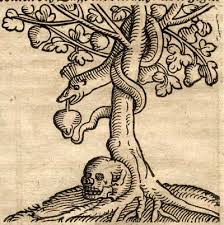
Psalm 19 tells us that the laws, decrees, and ordinances of God are about respecting the boundaries of relationships. This includes the delicate balance of our ecosystems and being mindful of our impact on them. And yet we continually cross those lines and insist that we can and should pluck the fruit from the tree of knowledge of good and evil, rationalizing that we have the right to become like God.
But just because we can does not mean that we should. The warnings are clear, and they have direct bearing on the arguments against fracking. Do not continue to pollute the air, water and soil. You’ll learn good and evil the hard way when your children die from strange diseases and you can’t swim or eat fish from the poisoned waters. Do not continue drilling for fossil fuels. You’ll learn good and evil the hard way when the gasses trap heat within the atmosphere and melt your icebergs and flood your islands and coastlands and whip up catastrophic weather events. Do not continue to clear-cut the earth to make way for one more frack pad or industrial waste land. You’ll learn the good and evil the hard way when species die out and invasive plants and animals prey on your weakened natural habitats.
There are limits and boundaries that God has established which need to be respected. God created the best carbon-sequestering system that could have ever been devised: that shale and oil is buried thousands of feet beneath the earth's surface because it was meant to stay there! When we release it into the atmosphere it disrupts the delicate balance created over time to sustain life on this planet.
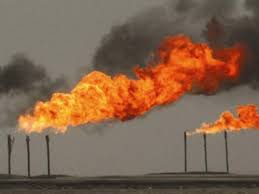
So we have done more than just cross the line. We have decimated the entire garden. We are not just plucking fruit from the tree anymore. We’re cutting the whole tree down – indeed entire swaths of forests - to drill down to gas that tempts us with its illusory promises of power and wealth.
Did the original humans respect these boundaries? No. They did not obey the limits God set for them. They ignored the warnings, flouted the rules, and crossed the line. There’s almost a feeling of entitlement you sense from Eve and Adam’s rationalization of their disobedience. It’s as if they’re saying, “This is our garden after all. God gave it to us. We should be allowed to do anything we want with it. Look, the fruit is good to eat. It will make us smarter, better, richer. God just doesn’t want us to be like God. God’s afraid we’ll know what God knows. And why shouldn’t we?”
And because of this arrogance, there is an immediate cascade of events that shatters the relationships of paradise. The humans hide from God, and are not honest with God or themselves. They blame each other, and they blame one of God’s creatures for the temptation. They refuse to accept responsibility for what has happened, but the consequences are unavoidable. From that point on, their relationship with the earth is cursed: "Cursed is the ground because of you; through painful toil you will eat of it all the days of your life." (Genesis 3:17b , RSV). All because of human beings’ insistence that we can have whatever we want whenever we want it, no matter what the cost or the consequence.
Psalm 19 tells us that the laws, decrees, and ordinances of God are about respecting the boundaries of relationships. This includes the delicate balance of our ecosystems and being mindful of our impact on them. And yet we continually cross those lines and insist that we can and should pluck the fruit from the tree of knowledge of good and evil, rationalizing that we have the right to become like God.
But just because we can does not mean that we should. The warnings are clear, and they have direct bearing on the arguments against fracking. Do not continue to pollute the air, water and soil. You’ll learn good and evil the hard way when your children die from strange diseases and you can’t swim or eat fish from the poisoned waters. Do not continue drilling for fossil fuels. You’ll learn good and evil the hard way when the gasses trap heat within the atmosphere and melt your icebergs and flood your islands and coastlands and whip up catastrophic weather events. Do not continue to clear-cut the earth to make way for one more frack pad or industrial waste land. You’ll learn the good and evil the hard way when species die out and invasive plants and animals prey on your weakened natural habitats.
There are limits and boundaries that God has established which need to be respected. God created the best carbon-sequestering system that could have ever been devised: that shale and oil is buried thousands of feet beneath the earth's surface because it was meant to stay there! When we release it into the atmosphere it disrupts the delicate balance created over time to sustain life on this planet.
So we have done more than just cross the line. We have decimated the entire garden. We are not just plucking fruit from the tree anymore. We’re cutting the whole tree down – indeed entire swaths of forests - to drill down to gas that tempts us with its illusory promises of power and wealth.
Natural gas is not a gift from God, any more than any other
fossil fuel is. Any fuel that requires
or results in the large-scale industrialization of what was once beautiful
woodlands, farmland, meadows and rural communities, the poisoning of billions
of gallons of water, the destruction of contiguous forests, compressor stations
threatening explosions and emitting poisonous gases, and the ruination of
communities and public health is certainly no gift from God.
What is a gift
from God is clean water and air, intact forests and natural lands, and the
ability of human beings to discern how to live within the natural boundaries
God has set for us. God’s gift to us is
not natural gas, but the capacity to discover forms of fuel that do not
threaten the planet and human health. And
it is a gift from God to have communities valued for their protection of God’s
creation rather than their willingness to sacrifice for it.
Sometimes there is great blessing in establishing boundaries
and protecting them. Sometimes the benefits of changing your lifestyle or
business practices to live in accordance with God’s designs in nature outweigh
the assumption of entitlement. Sometimes foregoing profit in order to
preserve God’s natural legacy reaps rewards far beyond monetary wealth. And sometimes the real gift is trusting that
there is a reason why the forbidden fruit is placed so far out of reach. It’s better left alone – for our sake, for
the sake of the planet, and for the sake of our relationships with each other
and God.
